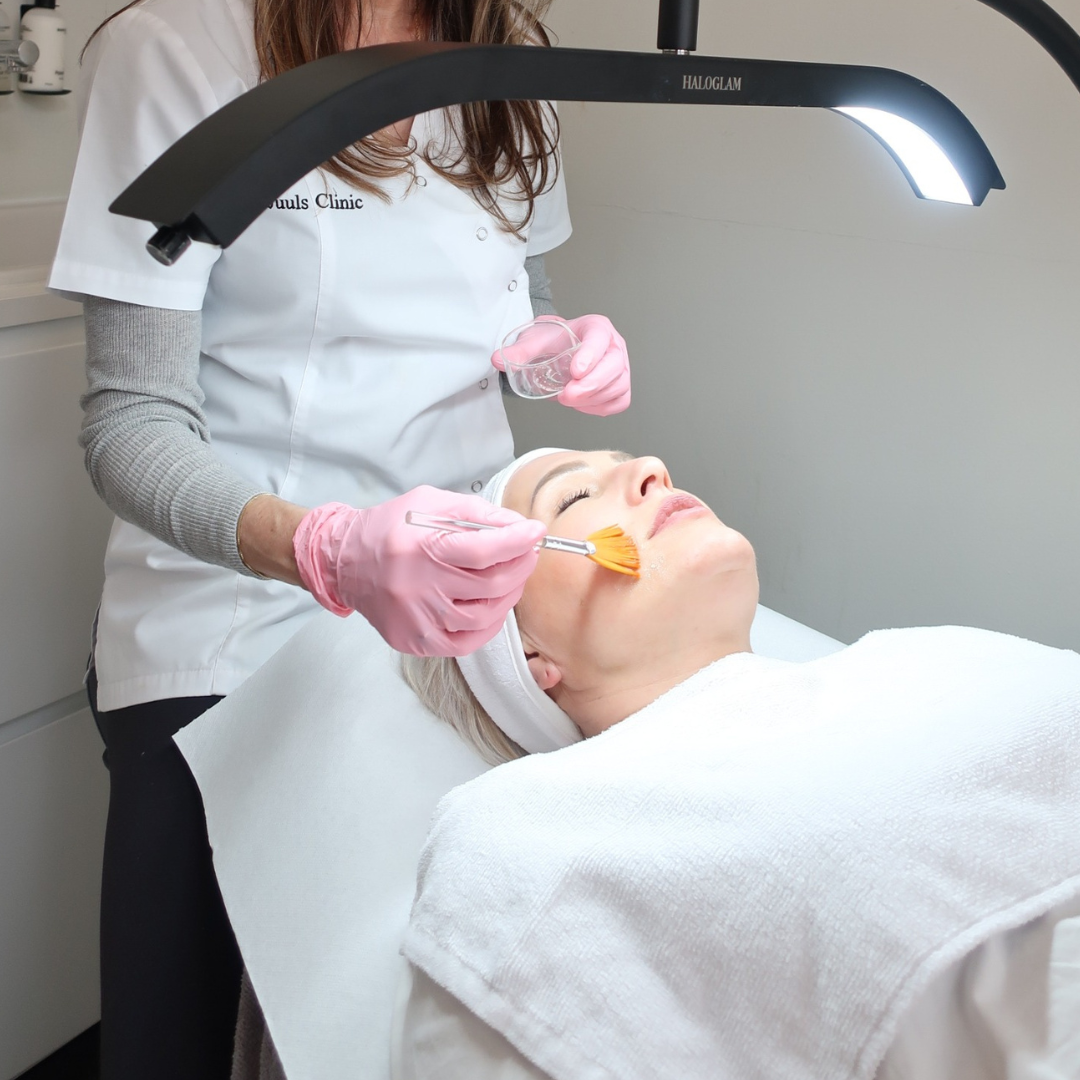
TCA Peel
The TCA (Trichloroacetic Acid) Peel is a medium-depth medical peel that penetrates deeper into the skin layers than superficial peels. This makes it a highly effective solution for treating stubborn issues like deep wrinkles, persistent pigmentation, and acne scars. If you are looking for dramatic, long-lasting results, this is the transformative treatment for you.
What does the treatment involve?
TCA Peel is a controlled chemical treatment that removes the skin surface to stimulate the creation of new, healthier tissue.
-
Deep Penetration: The active ingredient, Trichloroacetic Acid, penetrates deeper than superficial peels. This stimulates the production of new collagen and elastin, the essential building blocks for firm and plump skin.
-
Custom Intensity: The peel is available in various concentrations (12%, 15%, 18%). Our specialists determine the depth and intensity based on your skin type and specific treatment goals.
-
Safety First: With over 15 years of experience in medical peels, we offer you a safe and controlled treatment to minimize the risk of complications.
Treatment in steps
A successful TCA peel is a process that begins with careful preparation (total duration: 45 minutes):
-
Pre-Peel Preparation (At Home): You start at home with a personalized ZO Skin Health or Dermaceutic skincare package. This is essential to condition the skin for a safe, effective, and even result.
-
The Treatment: Our specialists carefully apply the TCA peel in multiple layers, based on your skin type and goals. You may experience an intense tingling or burning sensation during application, which quickly subsides.
-
Neutralization & Calming: The peel is neutralized. A cooling mask applied after the peel immediately soothes the skin.
Results and Expectations
-
Result after 1 treatment: Visible shedding of damaged skin, resulting in completely new, smoother skin.
-
Number of Treatments Needed: For optimal and complete transformation, we usually recommend 3 treatments, with an interval of 4 to 6 weeks.
-
Recovery Time (Downtime): Expect 5 to 14 days of recovery. During this period, your skin will peel significantly and show redness. This is a necessary and crucial part of the renewal process.
-
When Visible: The full results are visible after the complete healing period, usually 10 to 14 days post-treatment.
Indications
The TCA Peel is the best solution for deep and stubborn skin issues:
-
Stubborn pigmentation and melasma
-
Deeper acne scars and uneven skin texture
-
Fine lines and wrinkles
-
Sun damage and aging
Duration and Price
The TCA Peel lasts 45 minutes.
-
Price per single session: € 175,-
-
Package Price (Most Recommended): A course of 3 treatments including 4 Dermaceutic home products (essential for preparation) costs € 645,-.
Frequently Asked Questions (FAQ)
Q: Why is the pre-peel preparation so important?
A: Preparation with ZO Skin Health or Dermaceutic products is essential for safety and results. It ensures the TCA penetrates the skin evenly, minimizes the risk of complications (like unwanted pigmentation), and speeds up the healing process.
Q: How bad is the downtime? Can I work from home?
A: The downtime is significant. Your skin will be visibly peeling, red, and possibly swollen. We recommend minimizing social obligations for 5 to 14 days. Working from home is possible, but be prepared for the visible shedding.
Q: Can the TCA peel be done all year round?
A: No. Due to extreme sensitivity to UV radiation after the treatment, the TCA peel is exclusively performed in the autumn and winter (October through March). Strict sun avoidance is absolutely necessary.
Q: What is the difference between the TCA Peel and the Stimulator Peel?
A: The TCA Peel is a medium-depth peel with long downtime for dramatic results against scars and deep pigment. The Stimulator Peel is a superficial peel with zero downtime for an instant glow and mild improvement.
Q: Is this peel suitable for darker skin types?
A: The TCA peel is a powerful treatment. Although possible, it requires very strict preparation and aftercare to minimize the risk of post-inflammatory hyperpigmentation (PIH). This is always discussed and monitored during the consultation.